Bloomingdale Roofs Work Harder Than Almost Any in the Country
There are places in America where a roof is simply a roof. It keeps out rain, blocks wind, and does its job quietly for decades without much drama. Bloomingdale, Florida, is not one of those places.
Nestled in the heart of Hillsborough County between Brandon and Valrico, Bloomingdale is a thriving suburban community whose homes sit squarely in the path of some of the most demanding weather conditions in the entire United States. The combination of intense summer heat, relentless humidity, powerful afternoon thunderstorms, and the ever-present threat of tropical storms and hurricanes means that roofing systems here face a level of year-round punishment that most of the country simply never experiences.
For Bloomingdale homeowners, the roof is not a background feature of the house. It is the single most important line of defense between everything inside the family, the belongings, the structure itself, and the elements outside. A roof that underperforms in this environment does not just look bad. It leaks. It fails. It allows water, wind, and heat to compromise the very integrity of the home it is supposed to protect.
This is why the roofing decisions Bloomingdale homeowners make matter so much and why choosing the right roofing professionals, the right materials, and the right approach is one of the most consequential investments a property owner in this community can make.
Understanding Bloomingdale’s Roofing Environment
Before exploring what excellent roofing service in Bloomingdale, it is worth understanding precisely what makes this community’s climate so demanding on residential roofing systems.
The Florida Sun and Heat Load
Florida’s subtropical sun is relentless. Bloomingdale experiences intense UV radiation and high temperatures for the majority of the year, creating a thermal environment that places extraordinary stress on roofing materials. Asphalt shingles expand and contract with daily temperature cycles, gradually loosening the adhesive bonds that hold granules in place and seal tab edges against wind uplift. Over the years of this cycle, shingles that were installed correctly and were initially watertight become brittle, cracked, and vulnerable.
Dark-colored roofing materials absorb heat and transfer it into attic spaces, dramatically increasing cooling loads and energy costs. In a community like Bloomingdale, where air conditioning runs for eight or nine months of the year, a poorly performing roof has real and ongoing financial consequences beyond its structural condition.
Understanding heat load and selecting roofing materials and colors that minimize solar absorption while maintaining the aesthetic character of the neighborhood is a dimension of Florida roofing expertise that local professionals bring to every project.
Humidity and Moisture Infiltration
Humidity in Hillsborough County is not a seasonal phenomenon. It is a year-round reality that creates moisture challenges for roofing systems that homeowners in drier climates never encounter. High ambient humidity accelerates the growth of algae, moss, and lichen on roofing surfaces. The black streaking visible on many Florida roofs is not dirt but biological growth that, left untreated, gradually degrades roofing materials and shortens their effective lifespan.
More critically, humidity and the frequent rain events that accompany it create constant opportunities for water infiltration through any weakness in a roofing system. Cracked flashing, lifted shingle edges, failed pipe boot seals, compromised ridge cap material, and deteriorated valley flashing all become active leak pathways in Bloomingdale’s wet environment in ways they might not in a drier climate. A roofing system that is technically sound but not properly detailed for Florida’s moisture exposure will fail prematurely.
Thunderstorm Season
From late spring through early fall, Bloomingdale experiences some of the most intense and frequent thunderstorm activity anywhere in the country. The Tampa Bay area consistently ranks among the top regions in the United States for lightning strikes, and the afternoon thunderstorms that roll across Hillsborough County between June and September bring not just lightning but powerful wind gusts, heavy rain, and hail that can inflict significant damage on roofing systems in a matter of minutes.
Wind-driven rain is a particular challenge. At high enough velocities, rain can penetrate beneath shingle edges, through ridge vents, around pipe penetrations, and into any gap in the roofing envelope that standard installation does not fully seal. Roofing systems in Bloomingdale must be installed and maintained to resist these dynamic moisture loads, not just static rainfall, if they are to provide reliable protection through storm season.
Tropical Storms and Hurricanes
Bloomingdale sits close enough to both the Gulf Coast and the Atlantic to be vulnerable to tropical weather systems tracking across the Florida peninsula. While the community does not sit on the coastline, tropical storms and hurricanes that make landfall anywhere on Florida’s west coast or track across Central Florida bring sustained high winds and intense rainfall that test roofing systems to their limits.
Florida’s building codes are among the most stringent in the nation after the devastating lessons of Hurricane Andrew in 1992 established specific requirements for roof construction and installation in the state. These requirements address wind uplift resistance, fastener patterns, decking attachment, and underlayment specifications that are meaningfully different from roofing codes in less exposed states. A roofer who does not know and follow Florida-specific installation standards is not properly equipped to serve Bloomingdale homeowners.
The Roofing Services Every Bloomingdale Homeowner Should Know
Roof Inspection: The Foundation of Smart Roofing Decisions
Every good roofing decision begins with accurate information. A professional roof inspection provides Bloomingdale homeowners with a clear, honest picture of their roof’s current condition: what is performing well, what is deteriorating, where vulnerabilities exist, and what timeline they are working with before repairs or replacement become necessary.
In Florida’s demanding climate, annual roof inspections are not overcautious; they are prudent property management. Many of the most costly roofing failures in this market are the result of small problems that went undetected and unaddressed until they became large ones. A lifted shingle edge that allows wind-driven rain to penetrate the underlayment. A hairline crack in flashing around a chimney or skylight that admits moisture for months before a visible stain appears on the ceiling below. A section of the ridge cap has lost its seal and is gradually allowing warm, humid air to enter the attic space.
Professional inspections identify these issues early when they are still minor and inexpensive to address, rather than after they have caused the kind of cascading damage that requires major intervention.
Inspections are also essential after any significant weather event. A severe thunderstorm, a tropical storm passage, or a hail event that moves through Bloomingdale can cause damage that is not visible from the ground, but that compromises the roof’s integrity in ways that will manifest as leaks and structural issues over the following months. Post-storm inspections by qualified roofing professionals provide both documentation of any damage for insurance purposes and a clear picture of what repairs are needed.
Roof Repair: Protecting Your Investment With Timely Attention
Not every roofing issue requires full replacement. Many of the most common problems Bloomingdale homeowners encounter are readily addressable through targeted professional repairs, extending the functional life of an existing roof and deferring the higher cost of replacement for years.
Common repair needs in the Bloomingdale market include replacement of damaged or missing shingles, resealing and replacement of flashing at chimneys, skylights, vents, and wall intersections, repair of pipe boot seals around plumbing penetrations, resealing of ridge caps and hip caps, repair of soffit and fascia damage resulting from moisture intrusion, and addressing deteriorated or improperly installed valley flashing.
The key to successful roof repair is accurate diagnosis. The location where a leak appears inside a home rarely corresponds directly to the location where water is entering the roofing system. Water infiltrates at a point of vulnerability, travels along the roof deck, rafter, or ceiling materials, and manifests as a stain or drip at a completely different location. Experienced roofing professionals understand this behavior and approach leak investigation systematically, identifying the actual entry point rather than simply patching the area above the visible interior damage.
Timely, accurate repairs preserve the integrity of the overall roofing system and protect the substantial investment a full roof replacement represents. Deferred repairs, on the other hand, allow damage to compound moisture that enters through a small gap, whichcan cause rot in roof decking, damage to attic insulation, growth of mold in wall cavities, and deterioration of interior finishes that multiplies the ultimate cost of remediation many times over.
Roof Replacement: When It Is Time for a Fresh Start
Every roof in Bloomingdale has a finite lifespan, and Florida’s climate accelerates the aging process compared to other parts of the country. Knowing when repair is the right answer and when replacement is the smarter investment is one of the most valuable judgments an experienced roofing professional provides.
Several factors indicate that replacement has become the appropriate course of action. When a roof has reached or exceeded its expected service life, typically 15 to 20 years for three-tab asphalt shingles, 25 to 30 years for architectural shingles, and longer for tile and metal systems, continued repair becomes increasingly uneconomical as the underlying materials lose their structural integrity. When granule loss has become widespread, and shingles are showing significant brittleness, cracking, or curling across large areas of the roof surface, the system as a whole has lost its ability to provide reliable protection. When repair costs over a short period are adding up to a significant fraction of replacement cost, replacement delivers better value and eliminates the ongoing uncertainty of a declining system.
Roof replacement in Bloomingdale is also frequently driven by insurance considerations. Florida’s property insurance market has become increasingly strict about the age and condition of roofing systems, with many insurers declining to write or renew policies on homes with roofs beyond a certain age. Proactive replacement of an aging roof can be essential not just for physical protection but for maintaining insurable status in the current Florida market.
A properly executed roof replacement in Bloomingdale involves far more than simply removing old shingles and installing new ones. It includes thorough inspection and repair or replacement of the underlying roof deck, ensuring all penetrations are properly flashed and sealed, installing appropriate underlayment for Florida’s wind and rain exposure, selecting materials that meet Florida Building Code wind resistance requirements, and completing all work in accordance with permit requirements and local code specifications.
Shingle Roofing: The Most Common Choice in Bloomingdale
Asphalt shingles remain the most widely used roofing material in Bloomingdale and throughout the Tampa Bay suburbs. Their combination of affordability, availability, design versatility, and adequate performance in Florida’s climate makes them the default choice for the majority of residential roofing projects in the community.
Not all shingles are equally suited to Florida’s conditions, however. Three-tab shingles, once the standard, have largely given way to architectural or dimensional shingles, which offer superior wind resistance, greater thickness, and enhanced durability compared to their predecessors. For Bloomingdale homes, architectural shingles with a wind resistance rating of at least 130 mph are the appropriate standard, reflecting the wind loads these roofs must be prepared to withstand during severe weather events.
Shingle color selection carries practical as well as aesthetic implications in Florida’s climate. Lighter shingle colors reflect more solar radiation and contribute meaningfully to reduced attic temperatures and lower cooling costs over the life of the roof. Energy-efficient shingle products specifically engineered for heat reflection can deliver ongoing energy savings that partially offset their incremental cost premium.
Tile Roofing: Durability and Florida Character
Concrete and clay tile roofing is deeply embedded in the architectural character of Florida communities, and Bloomingdale is no exception. Many of the community’s homes, particularly those built from the late 1980s through the early 2000s in the Mediterranean and Spanish Colonial styles that defined that era of Florida residential development, carry tile roofs that define their aesthetic identity.
Tile is one of the most durable roofing materials available, with properly maintained tile roofs routinely achieving lifespans of 40 to 50 years or more. The tiles themselves are highly resistant to Florida’s UV exposure, heat cycling, and moisture; they do not absorb water, do not grow algae as readily as asphalt surfaces, and do not lose their structural properties under thermal stress the way shingle materials do.
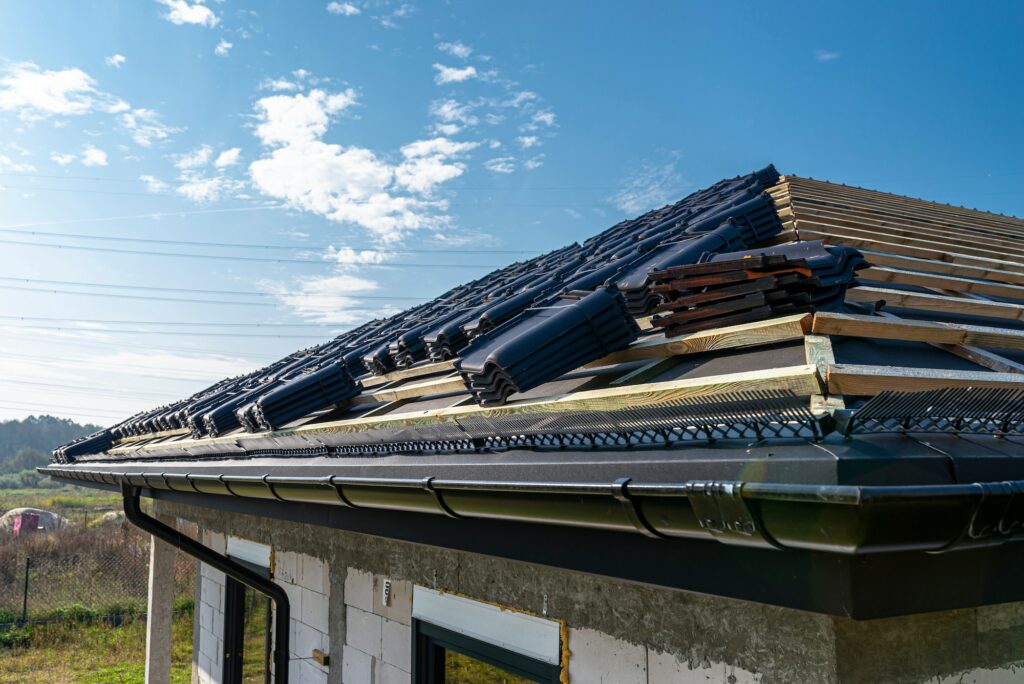
The critical nuance with tile roofing is that while the tiles themselves are exceptionally durable, the underlayment beneath them, which provides the actual waterproofing layer, has a significantly shorter lifespan. In Florida’s climate, tile roof underlayments typically require replacement every 15 to 25 years, even when the tiles above them remain in excellent condition. Failing to address underlayment deterioration leads to water infiltration beneath tiles that appear perfectly intact from above, one of the most common and avoidable sources of tile roof leaks in Bloomingdale homes.
Tile roofing also requires specific installation expertise. The weight of concrete and clay tile imposes structural loads that must be properly accounted for, tile patterns must be installed with correct overlap and fastening, and valleys and penetrations must be detailed with tile-specific flashing methods. Working with roofing professionals who genuinely know tile is essential for quality outcomes.
Metal Roofing: The Long-Term Performance Choice
Metal roofing has grown substantially in popularity among Bloomingdale homeowners over the past decade, driven by a combination of factors that make it particularly well-suited to Florida’s demanding climate. Standing seam metal roofing, in particular, offers a performance profile that is difficult to match with other materials in this environment.
Metal roofs are inherently resistant to the conditions that degrade other roofing materials in Florida. They do not absorb moisture. They are highly resistant to wind uplift when properly installed and fastened. They reflect solar radiation effectively, reducing heat transfer into the attic and lowering cooling loads. They are not susceptible to algae growth. They do not crack or become brittle under UV exposure. And they carry service life expectations of 40 to 70 years or more dramatically outlasting shingle systems and eliminating the replacement cycles that shingle roofs require over the life of ownership.
The upfront cost of metal roofing is higher than that of shingles, but the total cost of ownership calculation often favors metal when the extended lifespan, reduced maintenance requirements, energy savings, and potential insurance premium benefits are factored together. For Bloomingdale homeowners planning to stay in their homes long-term, metal roofing is an investment that consistently delivers strong value.
Flat and Low-Slope Roofing
Many Bloomingdale commercial properties, as well as some residential additions and covered outdoor living spaces, incorporate flat or low-slope roofing systems that require entirely different materials and installation methods than pitched residential roofing.
TPO (Thermoplastic Polyolefin) membrane roofing has become the dominant choice for flat and low-slope applications in Florida, offering excellent heat reflectivity, strong resistance to UV degradation, good flexibility across temperature cycles, and reliable waterproofing performance when properly installed and maintained. TPO is fully heat-welded at seams, creating a continuous membrane without the mechanical fasteners or adhesive joints that can become failure points under Florida’s thermal and moisture stresses.
Proper flat roof maintenance, including regular inspection of seams, drains, and penetrations, is essential in Florida’s rain-intensive climate, where standing water on a flat roof surface creates ongoing infiltration risk if the membrane has any compromise.
Storm Damage Repair and Emergency Response
In a community as weather-exposed as Bloomingdale, storm damage roofing response is not an occasional service; it is a core capability that residents depend on regularly. When a severe storm moves through the area and causes roofing damage, the speed and quality of the response directly determine how much additional damage occurs in the storm’s aftermath.
Missing shingles, displaced tiles, torn flashing, and damaged ridge caps exposed to Florida’s rain environment will cause progressive water infiltration with every subsequent rain event until they are properly repaired. Emergency tarping and temporary protection, followed by thorough damage assessment and professional repair, limit the total impact of storm events on Bloomingdale homes.
Experienced roofing professionals in this market also understand the insurance claim process for storm damage, providing accurate, well-documented damage assessments that support homeowners in securing the coverage their policies provide for legitimate storm-related roofing losses.
What Makes Florida Roofing Different And Why Local Expertise Matters
Roofing is not a commodity service where any contractor from any market can deliver equivalent results. Florida roofing is genuinely different from roofing in other parts of the country, and that difference matters in ways that directly affect the long-term performance of every roof installed in Bloomingdale.
Florida Building Code requirements for roofing are among the most demanding in the nation. Wind uplift resistance standards, fastener pattern requirements, underlayment specifications, and installation methodology requirements in Florida reflect decades of hard-won lessons from tropical storms and hurricanes. A roofing contractor who primarily works in other states or who does not stay current with Florida’s code requirements is not equipped to deliver compliant, properly protective roofing in this market.
Local material knowledge matters too. Understanding which shingle products, tile systems, and metal roofing options perform best under Florida’s specific conditions, UV intensity, thermal cycling, humidity, and wind exposure, is knowledge that accumulates through experience in this market. Product selections that are appropriate for a roofing project in the Midwest or Northeast may be inadequate or suboptimal for the demands of a Bloomingdale installation.
Permit and inspection processes in Hillsborough County follow specific procedures that local contractors navigate routinely. Ensuring that roofing projects are properly permitted, inspected, and documented protects homeowners’ interests during insurance claims, property sales, and any future disputes about the work performed.
Choosing the Right Roofing Contractor in Bloomingdale
The quality of the roofing contractor matters as much as the quality of the materials. Here is what Bloomingdale homeowners should look for when selecting a roofing professional.
Florida licensure. Roofing contractors in Florida must hold a state-issued license, either a Certified Roofing Contractor (CCC) license or a Registered Roofing Contractor (CRC) license. Always verify licensure through the Florida Department of Business and Professional Regulation before engaging any contractor.
Local experience and references. A contractor with a substantial track record of completed projects in Bloomingdale and the surrounding Hillsborough County market brings local knowledge that translates directly into better outcomes. Ask for references from recent local projects and follow up on them.
Proper insurance coverage. Roofing contractors must carry both general liability insurance and workers’ compensation coverage. Request certificates of insurance before work begins and verify that coverage is current.
Transparent, written estimates. A professional roofing contractor provides detailed written estimates that specify the scope of work, materials to be used, including product names, specifications, and warranty information, and the full price. Verbal estimates or proposals that lack material specifics are red flags.
Manufacturer certifications. Leading roofing material manufacturers offer certification programs for contractors who meet training, installation quality, and volume requirements. These certifications from manufacturers like GAF, Owens Corning, CertainTeed, and others often enable certified contractors to offer enhanced warranty coverage beyond standard product warranties.
No high-pressure tactics. Legitimate roofing contractors provide clear information, give homeowners time to make considered decisions, and do not employ tactics designed to rush or pressure a commitment. Be cautious of contractors who appear after storms, soliciting business door to door with urgent pressure to sign immediately.
Maintenance Tips for Bloomingdale Homeowners
Between professional inspections and service visits, Bloomingdale homeowners can protect their roofing investment with a few consistent maintenance practices.
Keep gutters and downspouts clean and clear. Clogged gutters cause water to back up against the fascia and eventually penetrate beneath roofing edges a common and preventable source of moisture damage in Florida homes. In Bloomingdale’s tree-lined neighborhoods, gutter cleaning after periods of heavy leaf fall is particularly important.
Trim trees with branches overhanging the roof. Overhanging branches abrade roofing surfaces during wind events, deposit organic debris that holds moisture and promotes algae growth, and in severe storms can cause catastrophic impact damage. Maintaining clearance between the tree canopy and roofing surface is one of the most effective preventive measures available.
Address moss and algae growth promptly. The dark streaking that appears on many Bloomingdale roofs is biological growth that, over time, degrades roofing surfaces and shortens their lifespan. Professional cleaning with appropriate products and application of algae-resistant treatments extends roof life meaningfully in Florida’s humid environment.
Watch for interior warning signs. Water stains on ceilings, peeling paint near exterior walls, and musty odors in attic spaces are all indicators of potential roofing system failures that warrant prompt professional inspection.
Conclusion
Bloomingdale’s climate demands roofing that is genuinely built for Florida, installed correctly, maintained proactively, and backed by professionals who understand what this environment requires season after season.
A Squared Roofing brings precisely that expertise to every project in Bloomingdale and the surrounding Hillsborough County communities. From comprehensive roof inspections and targeted repairs to full replacements in shingle, tile, metal, and flat roofing systems, A Squared Roofing delivers the quality craftsmanship, Florida code compliance, and genuine local knowledge that Bloomingdale homeowners deserve. Licensed, insured, and committed to superior workmanship on every job, A Squared Roofing is the roofing partner Bloomingdale relies on through every storm season and every year that follows.
Contact A Squared Roofing today for a free consultation and estimate, and give your home the roof it deserves.